
What is the Science Behind Fear?
Source: CNN
Some people react to frightening situations like horror movies and roller coasters with enjoyment, while others experience stress. Learn about why our brains process fear in different ways.



Some people react to frightening situations like horror movies and roller coasters with enjoyment, while others experience stress. Learn about why our brains process fear in different ways.

Earth’s oceans are largely undiscovered and hugely important in our current climate. Read the introduction and then click the links at the end to find out more.

Excess carbon dioxide in the earth’s atmosphere is causing extinctions, killing coral reefs, and feeding global warming. Scientists recently stumbled onto a remarkably simple solution.
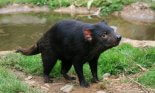
Marsupial babies develop in the not-terribly-sanitary environment of the mother’s pouch. To protect their young from infection, the milk of marsupials such as the Tasmanian devil has powerful antibiotic properties—properties that may help humans.
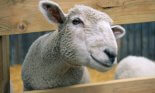
Studies have found that domesticated animals have smaller brains than their wild cousins. What does that mean for us?

Humans can tell when a change of season is underway through visual clues like the sprouting of new plants in spring or a sharp drop in temperature in winter. But how do animals know if it’s time to get busy building or to look for a nice spot to snuggle up in for a few months?

On January 28, 1986, the space shuttle Challenger exploded shortly after liftoff, killing all seven of its crew members. At this site, you can read and watch videos about this national tragedy.

Artificial intelligence is all around us—and it’s not a bunch of robots that behave like humans. Find out what AI looks like in today’s world, and discover how we got here.
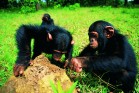
The line between humans and animals, biologist Jane Goodall argues, is fuzzy. In this TED Talk, she explores not only how human-like chimpanzees and other animals can be, but also how the human world and the natural world are intertwined—and how we can use our influence for good.
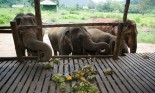
Scientists working with elephants from the Thai Elephant Conservation Center in Lampang, Thailand, designed an experiment that required the elephants to work together in order to get food. The elephants’ ability to understand and use teamwork was surprising!