
In this article, a reporter tells her story of becoming an American citizen and recalls some of her experience living with more than one cultural identity.

In this article, a reporter tells her story of becoming an American citizen and recalls some of her experience living with more than one cultural identity.

It makes sense to feel nervous when standing on a cliff, but why do we fear heights even when there’s no chance of falling?

A journalist reflects on the evolving bonds of a friendship formed on the basketball court.

As the United States government took over the West, a concerted effort to “kill the Indian” through education developed. Hear the stories of Native Americans forcibly separated from their culture.

Cultural anthropologist Janice Harper argues that expressing hatred is self-destructive.

Psychologist Anders Ericsson and his colleague explain how Malcolm Gladwell misunderstood Ericcson’s research when proposing that it takes 10,000 hours of practice to become successful in any given field.

After the 1906 earthquake and fire that destroyed a large portion of San Francisco, refugee camps of very small houses were built. They were later moved to different parts of the city and some still exist today. Click through the photos at the top of the article to see some of them.

Educator and former U.S. Foreign Service officer Chris Livaccari discusses how Amy Tan’s “Mother Tongue” inspired him to examine his own family’s use of language.

In this review of Testosterone Rex by Cordelia Fine, criitc Annie Murphy Paul explains how the author flips how we think about gender on its head.
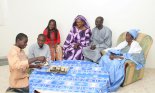
Do immigrants from African countries take on a shared cultural identity in American communities? This article takes a look at the case of Houston, Texas.

Psychology Professor David S. Yeager has a simple message that can help teens manage their stress and anxiety: People can change. Read to find out how keeping this idea in mind can be useful when navigating the transition into high school.

Using Twitter, Bana al-Abed has chronicled her experience of the war in Syria. For this reason, she has been called a modern-day Anne Frank. Read to learn more about this remarkable young girl and her evacuation from Aleppo.

This short video, part of a critical thinking series, discusses how we misinterpret patterns and the problems that can result from that error.

Learn about how a Supreme Court case nearly a century ago has influenced our approach to the freedom of speech.

Although it resulted in more loss of life than the Nazi concentration camps, the Soviet Gulag system is less well known. One survivor has spent his life working to change that.

If you’re not very outgoing, it may seem hard to make your voice heard. But quiet, thoughtful teens have a lot to offer.

A psychiatrist analyzes the long-term effects of terrorist attacks.

When you need to make a choice, do you go with your gut, or do you carefully evaluate each option? Read about several strategies and the types of decisions they fit best.

A bee; is it an insect to be feared or a mainstay in the production of our fresh food? Well, it depends how your mind perceives it. It’s quite possible to change the way we look at things.

One of Africa’s leading environmentalists and a political activist, Wangari Maathai was the first African woman (in East and Central Africa) to earn a doctorate degree. And, in 2004 she was the first African woman to receive a Nobel Peace Prize for her work on sustainable development in Kenya among other things.