
Why Are Shirt Buttons on Different Sides for Men and Women?
Source: Mental Floss
Read about some interesting theories related to fashion for men and women. Did nobility dictate the differences in fashion?



Read about some interesting theories related to fashion for men and women. Did nobility dictate the differences in fashion?

To give people an idea of what it’s like to have dyslexia, Sam Barclay, a UK graphic designer, produced a typographic visual representation of how he sees text on a page.

Psychologist Ruth Blatt uses music as an example to explain how achieving success can often lead to risk aversion.

The timelessness and universality of Alexander Hamilton’s story is explored in this review of the popular hip-hop musical Hamilton.

Even when Photoshop can create false or impossible images, we still tend to trust what we see in photos as real. But not only can we not trust the veracity of photos now—images have been manipulated for aesthetic and political effect since the dawn of photography.
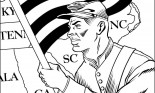
Award-winning historian Ari Kelman and the acclaimed graphic novelist Jonathan Fetter-Vorm produced this graphic novel about the civil war. Scroll down the page to access and read the book online.

This biography of poet Joy Harjo includes an overview of her work.

Professor David Gessner of the University of North Carolina Wilmington reviews the nature writing in Jason Mark’s recently-published Satellites in the High Country, and he touches on some transcendental ideas in the process.

The turn of the century from the 1800s to the 1900s was a time of great innovation and growth. Read about some of the influential inventions of the twentieth century’s first decade.

Duke professor Jedediah Purdy makes a counter-argument to Kathryn Schulz’s “Pond Scum” essay in The New Yorker, which criticized Henry David Thoreau both as a writer and as a person.