
The Evolution of the Human Eye
Source: TED Ed
How did a structure as complex as the human eye come to be?
| Perception and Reality | Are things always as they seem? |
How did a structure as complex as the human eye come to be?

It’s an eerie feeling: You walk into a place you know you’ve never been before but are overwhelmed by a sense of familiarity—a memory you can’t quite reach. Has this all happened before?
The sensation is known as déjà vu, and though it is hard to study, scientists are slowly figuring out why it happens.
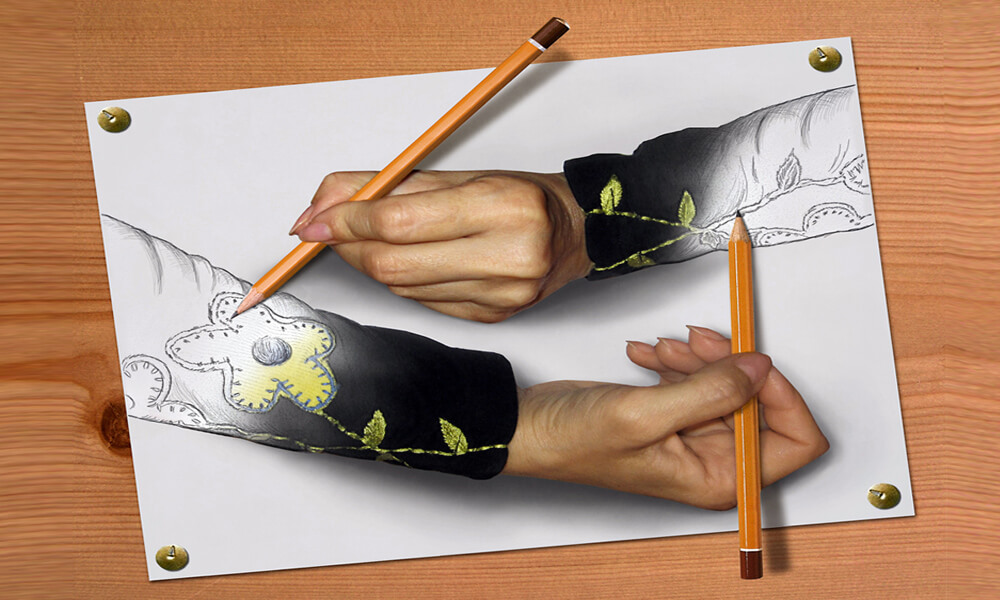
M.C. Escher was a Dutch graphic designer known for his innovative optical illusions, impossible drawings, and transforming tessellations, or interlocking tiles that slowly morphed from images like squares to fish to birds and back again. This video is from an exhibition of Escher’s art, which is no longer on display, but it nicely summarizes both his distinctive style and his continuing impact on popular culture.

Roses are red…or are they?
While flowers may appear one way to us, it turns out they are hiding secret patterns that our limited eyes cannot detect. But that’s OK. Those hidden patterns aren’t for us. They are for the pollinating insects flying by.
Hidden in the ultraviolet spectrum of light, this article explains the functions those designs serve and provides examples of flowers in different lighting conditions.

| Some people may believe they have all the facts and make bold decisions with only half the story. Here’s your reminder that in order to think smart, you should think twice. |

Some animals and insects are able to camouflaged themselves in various ways to help them hunt—or avoid being hunted. One assassin bug takes it to a scary new level, though. Read about the bug that covers itself in dead bodies in order to hunt its prey!

Have you ever found yourself seeing images right before falling asleep? If so, you might be experiencing hypnagogia! Learn more about what causes our pre-sleep hallucinations in this episode of SciShow, hosted by Hank Green.
Are our minds playing tricks on us all the time? Click this link to watch an animated video that explains what perception and hallucination have in common.

The 2024 Olympic Games in Paris had a goal of being the most environmentally-friendly games in history. One way to meet this goal was by asking the question: “What if the Olympic flame looked like a flame, but wasn’t one?” Learn how engineers came up with the illusion at the heart of the Olympic Games

Have you ever looked at an electrical outlet and thought it looked like a face? Or looked at a cloud and seen a bunny rabbit? If so, you’ve experienced the phenomenon of pareidolia. But why does our mind create faces out of random shapes? Read this article to learn more.

Disney is known for creating magical effects on-screen, but did you know they also use tricks and deception in their theme parks, too? This article discusses a few of the ways Disney–and other theme parks and entertainment venues–use optical illusions to create magical effects in real life.
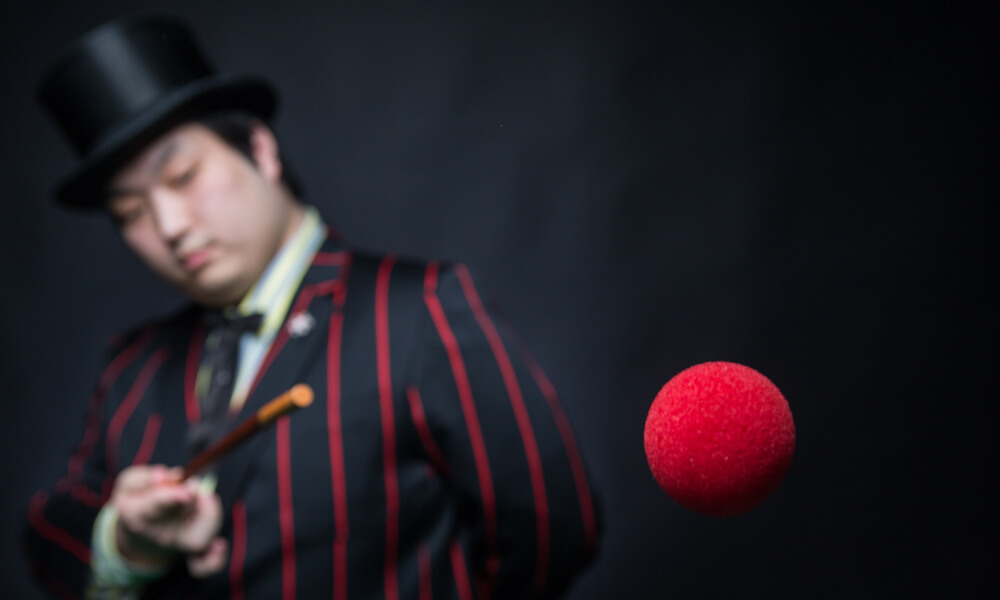
Magician David Kwong breaks down magic into what he calls the “7 Principles of Illusion” and explains what goes into the execution of a magic trick.
Beware: He does give some general spoilers for how some magic tricks are done.

Researchers have found that people wearing heavy backpacks perceive the hills they are climbing as steeper than people who aren’t wearing backpacks do. Read this article to find out more about how our perceptions can become distorted.

There is a famous optical illusion with two gray lines inside a number of black and white bars. The gray bars are the same color, but they appear lighter or darker depending on which bars are around them. Science was never sure why, but it seems the answer lies in you brain’s neurons and how fast they can fire.

When most people think of an illusion, they think of an image or video–but there are audio illusions that trick your hearing, too. After you watch this video, you’ll have to ask yourself “Can I trust my own ears?”

Eyewitness testimony can be really important when investigating crimes, but how can we make them more reliable? SciShow looks at the scientific and psychological evidence around several ways in which your memory can fail–and how we may be able to minimize these effects.

How good are you at basketball? What about playing an instrument? Psychological research suggests we’re not actually very good at evaluating our own abilities accurately. In fact, we frequently overestimate our own abilities thanks to something known as the Dunning-Kruger Effect.

Don’t let this optical illusion fool you. You won’t need to press play when you see this skyline illusion.
An interesting new study that shows how visual working memory can influence our perception of events.
Thanks to modern neuroscience, we can understand the brain processes that take place we encounter some visual illusions. Explore this collection of popular illusions and find out how they work.
* HMH is not responsible for the content of third–party websites.