
Have you ever imagined what it might be like to see a wooly mammoth crossing the plains? Some scientists are working to turn back the clock and revive extinct species. This multimedia site from The Long Now Foundation details the efforts.
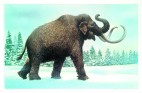
Have you ever imagined what it might be like to see a wooly mammoth crossing the plains? Some scientists are working to turn back the clock and revive extinct species. This multimedia site from The Long Now Foundation details the efforts.

How do optical illusions fool us? In this article, Cari Nierenberg explores the root cause: a mismatch between what the eyes perceive and how the brain interprets the information.
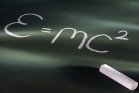
Albert Einstein revolutionized physics with the introduction of his Special Theory of Relativity in 1905. But what do you really know about time and space? Brian Greene, noted theoretical physicist and author, explains how time and space are actually changeable, and based on what the observer sees.

Have you ever found yourself struggling to write your English paper because you’re distracted by your smart phone or TV? Maybe a trip back to nature will help clear your head. Read this article to find out how getting away can help you regain your focus.
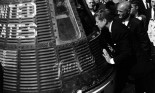
This site highlights major achievements in President Kennedy’s expansion of the space program. Learn more about the “space race” between the United States and the Soviet Union, as well as access historic speeches online.
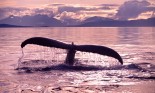
After a whale dies, its sunken carcass becomes home to hundreds of species of underwater creatures. This in-depth article from Scientific American describes the phenomenon known as whale fall.

Meet Clo-Bot! This is a robot of sorts–an iPad attached to an extendable pole on wheels that attends class in Point Pleasant Elementary School in Glen Burnie, Maryland! Clo-Bot is controlled remotely by Cloe who is at home recovering from surgery and, it enables her to participate with her classmates in school lessons as if she were in the room.
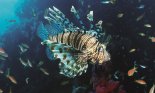
Lionfish are among some of the creatures taking over waters across the world, killing off native wildlife. As invasive species have no natural predators they multiply rapidly. Read about how the use of technology is now vital to combat the problem of extinction of native species.
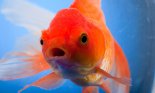
“I have a memory like a goldfish.” This reputation for our finned friends does not hold true apparently! Studies have disproved this idea that fish have poor memories and that they are better at navigating space than us.

Journalist Alison Flood investigates the increase of nature writing and reading in times of transition.

Psychologist Sarah Newman makes a distinction between avoiding things you fear and avoiding things you simply don’t like.
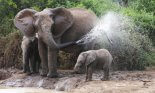
Professor Matthew Cobb reviews primatologist Frans de Waal’s book, in which he attempts to erase a behavioral division between humans and other animals.
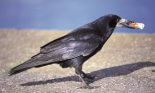
Corvids—members of the crow family—demonstrate a surprising range of intelligent behaviors in their interactions with humans.

Wildflowers aren’t just pretty to look at—they serve crucial roles in our environment.
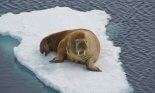
As global climate change increases temperatures at the poles, researchers consider the likely effects of all that extra liquid water.
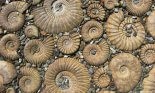
A geologist explores the intersection between his own field and myths around the world.

Psychologist Anders Ericsson and his colleague explain how Malcolm Gladwell misunderstood Ericcson’s research when proposing that it takes 10,000 hours of practice to become successful in any given field.
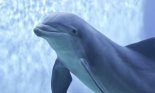
Find out how humans compare with the brightest members of the animal kingdom.
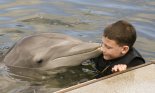
Humans are only just beginning to understand the genius of our cetacean cousins. What might we learn if we unravel how to communicate with dolphins?
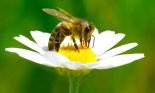
A bee; is it an insect to be feared or a mainstay in the production of our fresh food? Well, it depends how your mind perceives it. It’s quite possible to change the way we look at things.